Every day, over 361 billion emails are sent worldwide, making targeted email marketing the only way to ensure your brand isn’t lost in a sea of digital noise.
If you aren’t using a specific targeted email marketing strategy to reach the right person at the right time, you are likely leaving a potential $45-to-$1 ROI on the table.
Moreover, “Email Fatigue” is at an all-time high. Consumers are frustrated by irrelevant clutter, and major inbox providers now use AI to aggressively filter generic marketing into the “Spam” folder.
The only way to win the inbox is to shift from “volume” to “value.” To help you with targeted email marketing strategies in this article we’ve covered:
- What is targeted email marketing? Its types
- Top 5 benefits
- 7 steps to create a targeted campaign
- Targeted email marketing examples from real brands
- Targeted email marketing services, so that you can get started right away.
Send targeted emails that yield higher conversions effortlessly using Retainful’s pre-built targeted email workflows.
What is targeted email marketing?
Targeted email marketing is a strategy used to deliver relevant and personalized emails to specific audience segments based on their behavior, location, and demographics.
To do it effectively, collect accurate data, segment your list, and automate personalized workflows.
Unlike mass “batch and blast” campaigns, it leverages zero-party data preferences directly shared by customers to ensure you deliver exactly what your audience wants to hear.
Top 5 benefits of sending targeted emails
Here are 5 benefits of using a targeted marketing strategy for your business:
- Hyper relevance and higher open rate
- Increased engagement
- Better ROI
- Higher customer retention
- Stronger customer relationships
1. Hyper relevance and higher open rate
Targeted bulk email marketing allows you to scale personalization and relevance that increases open rates.
Targeted emails deliver content that addresses
- Your customer’s pain points
- Your targeted audience’s preferences
Pro tips:
- With behavioral-targeted email marketing, send personalized product recommendations based on previous purchases and search history to increase relevance.
- Use Zero-Party Data (preferences shared by users) to trigger content.
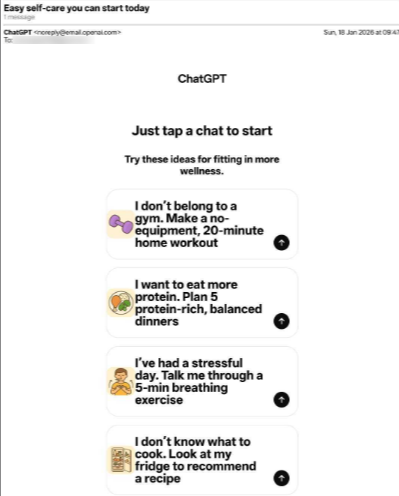
For example, OpenAI uses targeted emails to provide wellness prompts specifically to users who have previously engaged with self-care topics.
2. Increased engagement and email deliverability
For any email marketing strategy, landing in the inbox is the first goal, and in 2026 engagement rate of your email plays a vital role in reaching the inbox.
Major inbox providers (Gmail, Outlook) now use AI to monitor engagement depth. People don’t want to open and engage with emails that don’t provide value to them.
Sending high-value targeted messages only to the engaging segments, you maintain a low spam complaint rate (below 0.1%). This ensures your emails land in the Primary Tab rather than the Promotions or Spam folder.
For instance, a product restock email sent to customers who showed interest in the product will have higher open rates, click rates, and engagement.
3. Better ROI
The average ROI for email marketing ranges from $36 to $40 for every $1 spent.
Targeted bulk email marketing has the potential to yield a higher ROI than traditional email marketing since it focuses onquality over quantity.
This way, a targeted email marketing strategy lets you increase the RPR “Revenue per Recipient.”
Instead of sending promotional emails to your entire list, using targeted email marketing will result in more conversions and sales with fewer emails, reducing the cost.
4. Higher customer retention
When you start sending personalized, targeted emails, your customers will feel more connected to your business.
Target your loyal customers and send them the following personalized emails to increase customer retention and the overall CLV (Customer Life Cycle Value):
- VIP Perks email
- Regular replenishment emails
- Loyalty rewards
- Early adoption offers for product launches
- Pass to exclusive events
- Milestone Achievement Rewards
- Thank you discount emails
How to leverage email marketing integration for targeted customer retention campaigns?
Leverage integration by syncing your CRM with your email platform to track real-time purchase history.
This allows you to automate behavioral triggers, such as replenishment reminders and VIP loyalty rewards.
Use this data to deliver personalized value post-purchase, to significantly increase customer lifetime value and retention rates.
5. Stronger customer relationships
A few decades ago, people wanted products to solve their problems. Now, in addition to solutions, people prefer a personalized experience in every interaction with your business.
While generic email marketing can reach an audience, you need targeted email marketing to provide a personalized experience and strengthen your customer relationships.
Related reading: Successful Ways to Increase Customer Retention in Your Ecommerce Store
5 Types of targeted email marketing
Based on the target audience of your email marketing campaign, there are 5 common types of targeted email marketing.
- Demography targeted email marketing
- Geo targeted email marketing
- Behavioral targeted email marketing
- Psychographic targeted email marketing
- Marketing funnel based targeted email marketing
1. Demography targeted email marketing
Use demographic segmentation to make your emails more personalized to your target audience.
- Age
- Gender
- Marital status
- Income
- Occupation
- Education
- Place of residence, such as urban and rural
Here is an example: A luxury car brand targets users in the “High-Income” bracket ($150k+) with lease offers, while targeting “Early Career” professionals with entry-level model promotions.
Key traits: Age, Gender, Income, Job Title, Education.
2. Geo Targeted Email Marketing
In geo targeted email marketing, you can segment your audience based on their geographical location.
You can use geo-targeted email marketing on different scales based on your purpose:
- For local promotions and events, focus on the target audience within a specific state.
- When running nation-specific holiday campaigns, such as American Independence Day, tailor your messaging to the country’s audience.
- Target audience of a region like APAC(Asia Pacific) or EMEA(Europe, Middle East, and Africa) for cultural nuances and language barriers.
- Time-Zone Optimization: Send emails to land in the inbox at 9:00 AM local time of the recipient.
With geo-targeted email marketing, you can:
- Provide weather-based product recommendations
- Leverage region-centric special occasions
- Send emails in the appropriate time zones.
How to become a successful email marketer from India targeting US clients?
Focus on cultural nuance and time-zone synchronization. Align your campaigns with US holidays (like Thanksgiving) and use automated sending to land in US inboxes at 9:00 AM local time.
Mastering US compliance laws (CAN-SPAM, GDPR) is essential to building authority and ensuring high deliverability.
3. Behavioral Targeted Email Marketing
Behavioral targeted email marketing targets users based on actions they take (or don’t take) on your site.
You can target audience groups based on the following behaviors:
- Past interactions: How they have responded to your emails and messages
- Purchase history: If a customer buys a coffee machine, send a targeted follow-up for “Subscription Beans” 14 days later.
- Engagement level: Segment “Power Users” (daily openers) for VIP beta-testing invites, while sending “Win-back” discounts to those inactive for 60 days.
- Browse abandonment: If a user views a “Smartphone” three times but doesn’t buy, trigger an email with a hands-on review or a comparison guide.
For example, if a customer recently purchased a smartphone from your store, you can send an email with a coupon code for phone accessories instead of a random product promotional email.
4. Psychographic targeted email marketing
Psychographic marketing goes deeper into the “Why” behind the purchase.
It uses Zero-Party Data (surveys/preferences) to target beliefs, values, and lifestyle.
- The “Value” Segment: Target eco-conscious shoppers with “Sustainability Reports” rather than just discount emails.
- The “Personality” Segment: Use bold, risk-taking language for “Early Adopters” and security-focused, testimonial-heavy content for “Skeptics” or “Late Adopters.”
5. Marketing funnel based targeted email marketing
You can send targeted emails based on where your customers are in your marketing funnel.
- New subscribers: Send a welcome email to introduce your brand. To encourage a first purchase, include a discount.
- For customers in the consideration phase: Include educational content, ratings, reviews, and UGC in your targeted emails to build trust.
- Loyal customers: You can send exclusive loyalty offers or early adopters’ rewards to increase customer retention.
- Advocacy stage customers: Send affiliate emails and referral emails with discounts to grow your email list.
Related reading: 10 Email List Management Software + Best Practices
How to create targeted email marketing campaigns? 7 steps
Creating targeted emails is not sending out emails to random groups of people.
Creating the best targeted email is all about:
- Understanding your audience
- Grouping them.
- Delivering personalized content to each group.
The 7 steps to create targeted emails are as follows:
- Define your audience & collect zero-party data
- Segment your email list
- Personalize your emails
- Create engaging content
- A/B Test Your Campaigns
- Automate your Targeted Email Marketing Campaigns
- Track & optimize your email campaigns
1. Define your audience & collect zero-party data
The first step increating targeted email campaigns is to know who your target audience is for email marketing. The more you understand your customers, the easier it will be to create the best-targeted email campaigns.
Start by gathering customer data like:
- Customer’s purchase history.
- Collect reviews from your customers directly to understand their needs.
- Collect your customers’ demographic details.
- Track user behavior, email metrics like open rates and CTR.
Zero-Party Data is the information customers intentionally share with you. To collect such data, you can use a “Style Quiz” or “Preference Center”.
Make sure your customers are aware of the data collection and why you are collecting it.
Targeted opt-in email marketing ensures you’re reaching customers who have willingly subscribed to receive your emails.
Ensure your forms are GDPR/CCPA compliant. Transparent data collection reduces unsubscribe rates and builds long-term trust.
How to collect targeted emails for marketing campaigns?
The most effective way to collect targeted emails is to use incentivized “Value Exchanges,” such as gated lead magnets or interactive quizzes. By asking for one key preference during the opt-in process.
2. Segment your email list
Use segmentation to create targeted email marketing audience lists. Segment your email list into smaller groups to send targeted emails.
Your segmentation should be based on the shared characteristics that align with your email marketing goal. It allows you to create meaningful emails that are more likely to lead to conversions.
Additionally, creating targeted email marketing lists makes it easier for you to organize your customers into meaningful segments.
To build effective targeted email lists, you need both fixed lists and dynamic segments. These segments should update automatically based on specific segmentation criteria.
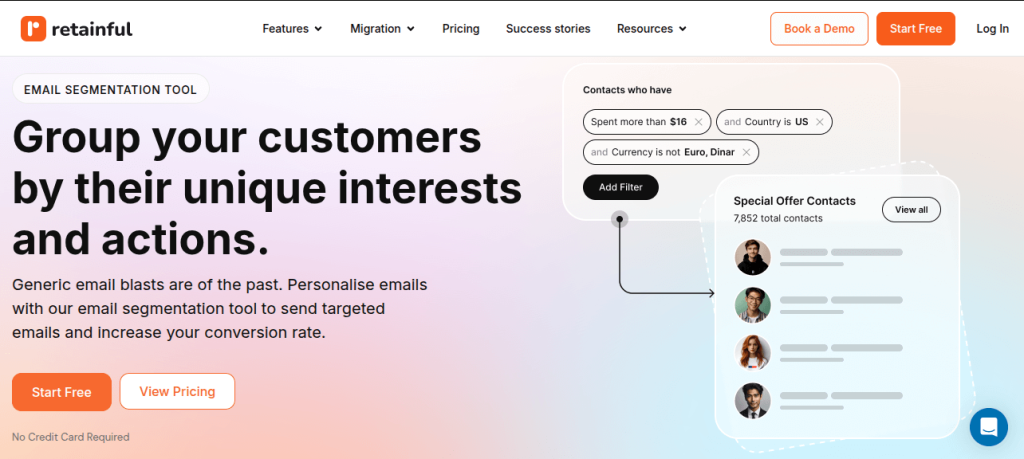
Retainful is one such email segmentation tool that lets you create static and dynamic segments based on the set segmentation criteria.
Use multiple segmentation criteria in one place at Retainful and launch your tailored email campaigns effortlessly.
How to select your segmentation criteria for targeted email marketing?
There are several criteria to segment your email list. Here, we have discussed the most effective segmentation based on purchase history.
RFM
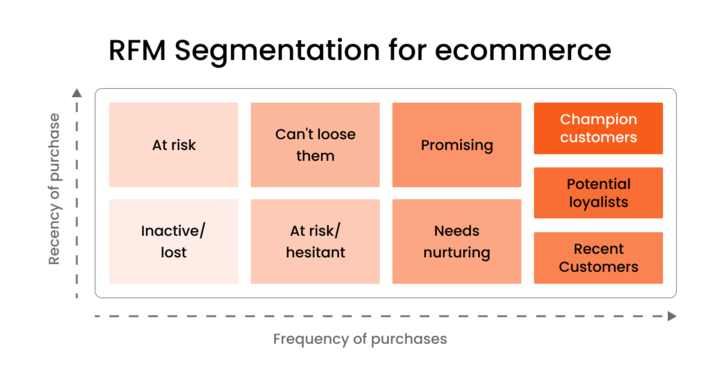
RFM (Recency, Frequency, Monetary value) strategy can help you to segment your high-value customers.
- Recency – How recently has the customer purchased from your store?
- Frequency – How often have your customers purchased from your store?
- Monetary Value – How much money has a customer spent within a given time frame?
What to send to your highly valued customers
For high-value customers, you can send VIP offers, loyalty program invitations, and exclusive access to product launches.
What to send to your low-value customers
For low-value customers, you can send upselling and cross-selling emails with time-sensitive discounts to encourage repeat purchases.
What to send to your new customers
To your new subscribers, you can send personalized welcome emails based on their demographics and interests.
Tracking where the subscribers signed up, such as blogs, social media posts, or your website, can reveal your customers’ initial interest.
What to send to your inactive/about-to-churn customers
To re-engage inactive or at-risk customers, send personalized emails with exclusive offers, highlight new features/content, and ask for feedback to understand their needs and improve your service.
Related reading: Difference between Email Segmentation and Personalization
3. Personalize your emails
Personalization is what makes targeted email marketing different from regular email campaigns.
Personalization in targeted email marketing involves tailoring email content and delivery to individual recipients based on their data and behavior, making the message more relevant and engaging.
You can personalize your target emails using
- Dynamic Content
- Purchase History
- Past Interactions
- Behavioral pattern
- Demographics
Pro tip: Include “Loyalty Points” balance or “Last Item Purchased” reminders to make the email feel like a service, not an ad.
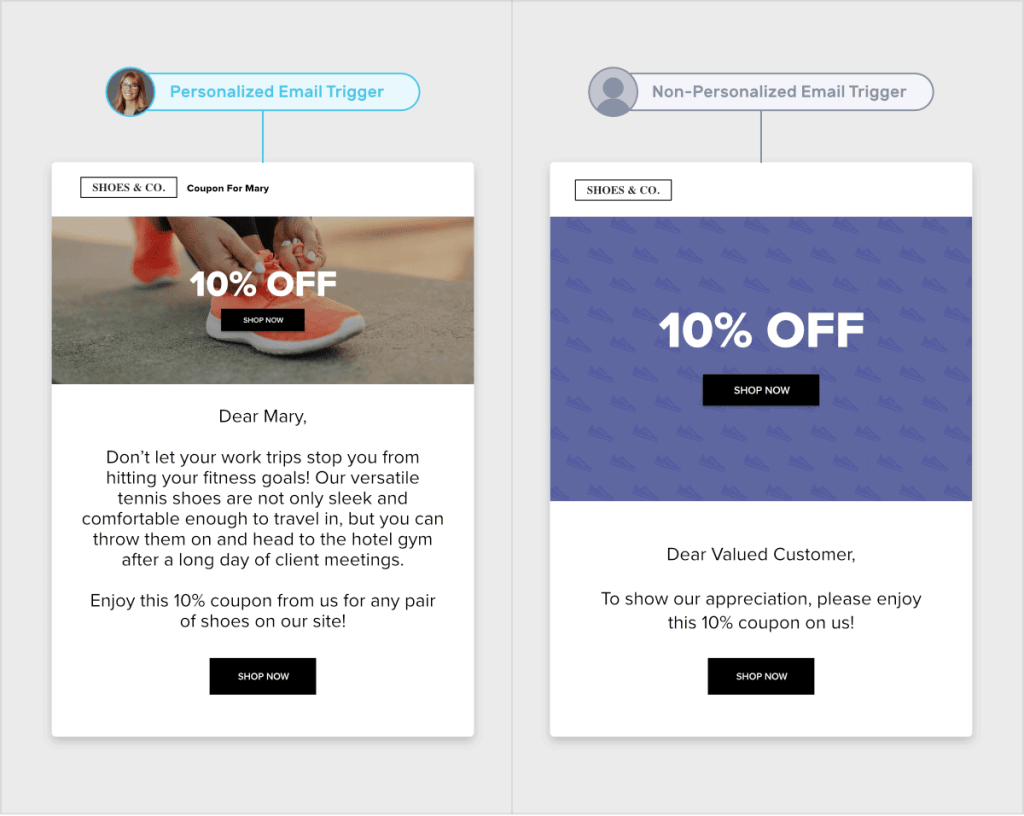
For instance, this is a comparison email from Shoes&Co depicting how a personalized email can be more targeted, relevant, and engaging.
Personalized greeting, email copy, visuals, and a dynamic coupon make the email more relevant to the recipient.
4. Create engaging content
Your email content should be relevant, valuable, and visually appealing to your target audience.
Here’s what to include in your email:
- Attention-grabbing subject line: Create a compelling subject line that entices your audience to open the email.
- Know your customer: Create content that aligns with your customers’ interests and addresses their pain points.
- Clear Call to Action (CTA): Include a clear and actionable CTA that guides your audience on what to do next.
- Exclusive discounts: Offer exclusive discounts or promo codes to make your audience feel valued and encourage them to make a purchase.
For example, you can use a personalized subject line and CTA like this:
Subject: John, Your Next Workout Gear is Waiting – Enjoy 10% Off!
CTA: Grab Your Offer Now
5. A/B test your campaigns
To create the best targeted email marketing campaigns, experiment with different email elements to discover what resonates best with your audience.
A/B test different variations of elements like:
- Email Layouts
- Subject line
- CTA (Call To Action)
- Sending frequency
- Email Schedule
- Visual elements
6. Automate your targeted email marketing campaigns
Sending a personalized email to different targeted email marketing lists at the right time is a ton of work. That’s why you need to use automated targeted email marketing. With automation, you can send personalized emails based on real-time customer behavior.
In particular, online store owners can leverage automation to send timely emails based on customer behavior and to run targeted e-commerce email marketing campaigns.
7. Track & optimize your campaigns
Track your email campaign metrics regularly to understand what’s working and what needs improvement.
Here are some key metrics you should keep an eye on to create the best targeted email marketing campaign.
- Open rate
- Click-through rate
- Conversion rate
- Unsubscribe rate
- Revenue generated
Use these insights to optimize your campaigns and send even more targeted emails.
Related reading: Ecommerce Email Campaigns that Could Help You Drive Conversion
4 Best targeted email marketing examples from high performing brands
We have provided the best targeted email marketing examples from big brands to show you how they have used targeted email marketing for their business.
Here are some of the best targeted email marketing examples:
- Adidas – Demographic targeted email marketing
- Starbucks – Geo targeted email marketing
- Amazon – Behavioral targeted email marketing
- Sephora – Marketed funnel based targeted email marketing
1. Adidas Demographic targeted email marketing
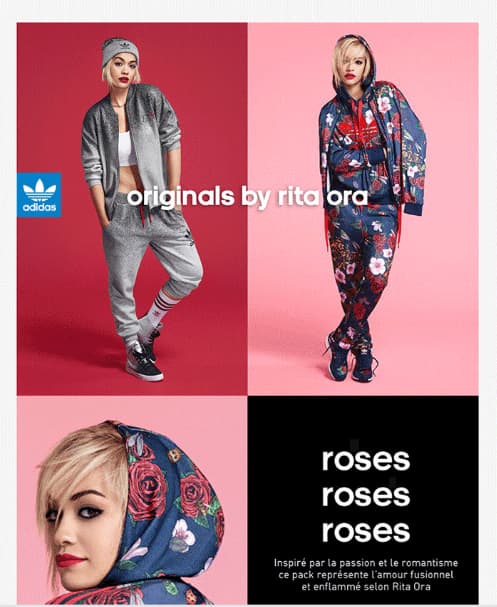
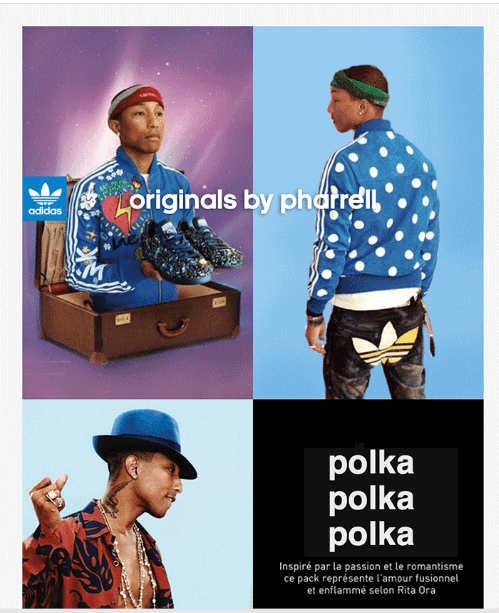
Adidas implements demographic-based targeted emails to make its campaigns more relevant.
They use dynamic content to display visuals that align with the recipient’s gender.
For example, it shows men’s shoes to male audiences and women’s apparel to female audiences. This personalization makes the email feel more relevant to the audience.
2. Starbucks geo targeted email marketing
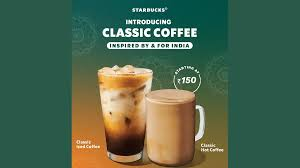
Geo-targeted email marketing campaigns are one of Starbucks’s effective email marketing strategies to connect with its customers. Starbucks sends promotional emails based on the recipient’s location.
For example, during winter, customers in colder regions receive emails about hot beverages like coffee or hot chocolate, while customers in warmer regions receive promotions for iced drinks.
This strategy makes the offers more relevant to the recipient’s local climate, increasing the likelihood of a purchase.
3. Amazon behavioral targeted email marketing
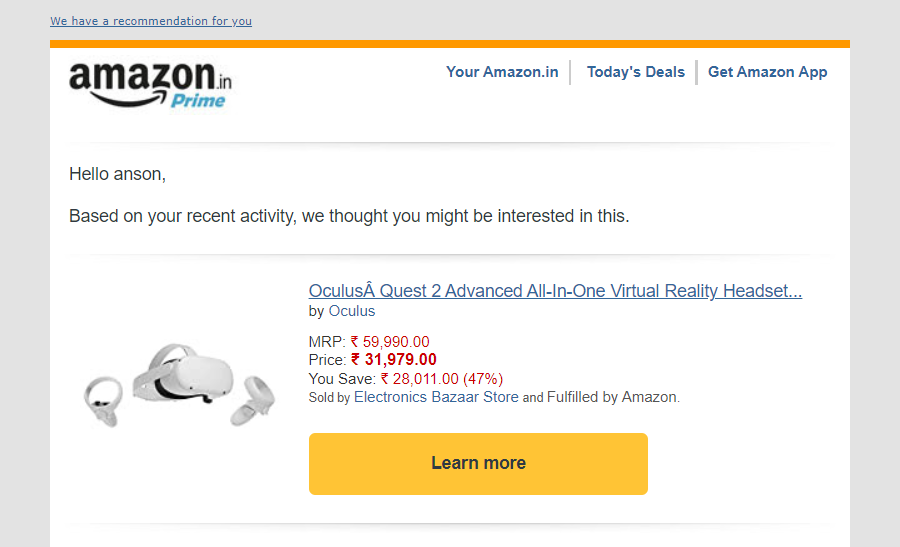
Amazon is the best behavioral targeted email marketing example that uses targeted e-commerce email marketing campaigns.
They send highly personalized product recommendation emails using behavioral targeted email marketing to their target audience.
If a customer browses a product without purchasing it, Amazon follows up with a “Still Interested?” email featuring the exact product along with similar product recommendations.
4. Sephora marketing funnel based targeted email marketing
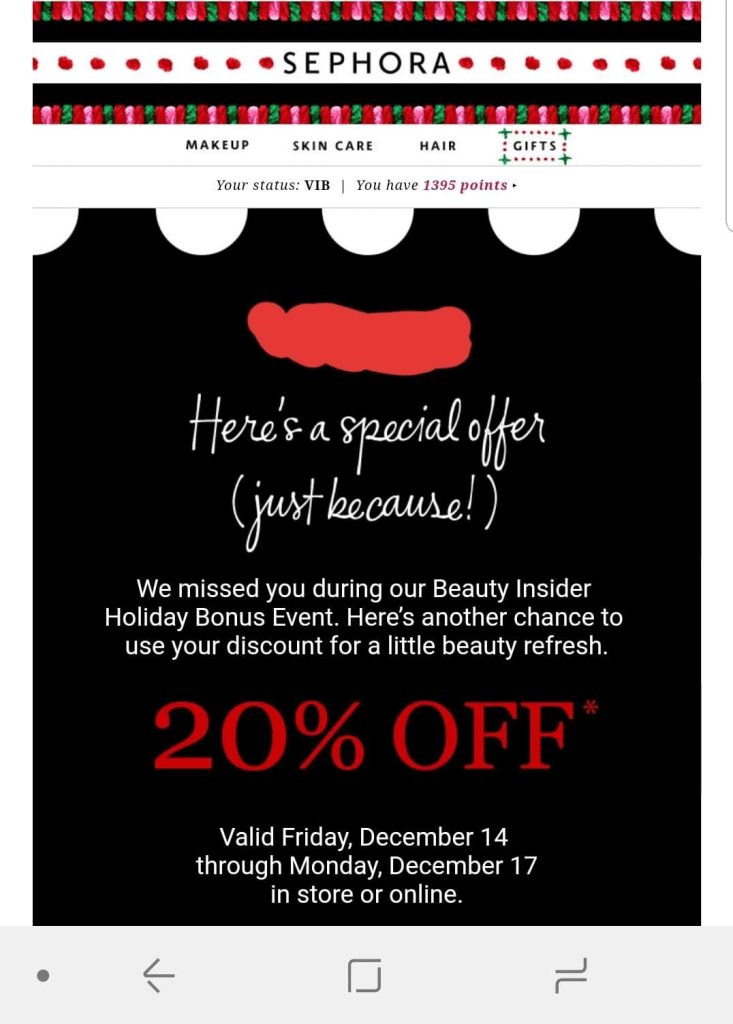
Sephora uses funnel-based targeted email marketing to reward its loyal customers through its Beauty Insider Program.
They send exclusive birthday discounts, point redemption reminders, and personalized product recommendations based on previous purchases to their high-value customers.
5 Best targeted email marketing services
Choosing the right targeted email marketing service is important to implement your strategy effectively. The right platform will help you automate your campaigns, segment your audience, and create personalized emails without much hassle.
Features to look for :
These are the important features to look for before choosing your targeted email marketing services:
- Segmentation – Platforms that will let you segment your audience list to send targeted emails.
- Email Automation – Automatically sends targeted emails based on customer actions like abandoned carts or sign-ups.
- Email Customization – Allows you to personalize content, subject lines, and product recommendations.
- Scalability – A Platform that allows you to send more emails as your business scales.
- Ease of use – Look for intuitive interfaces like drag-and-drop editors and ready-to-use email templates.
- Pricing – Affordable pricing plans that align with your business size and needs.
Here is a list of the top 5 targeted email marketing services
1. Retainful
2. Mailchimp
3. Brevo
4. Active Campaign
5. Klaviyo
1. Retainful
Retainful helps you segment your audience list dynamically. With its simple drag-and-drop interface, pre-built templates, and email personalization options, you can easily create automated targeted email marketing campaigns and send personalized emails without any hassle.
Explore Retainful features
2. Mailchimp
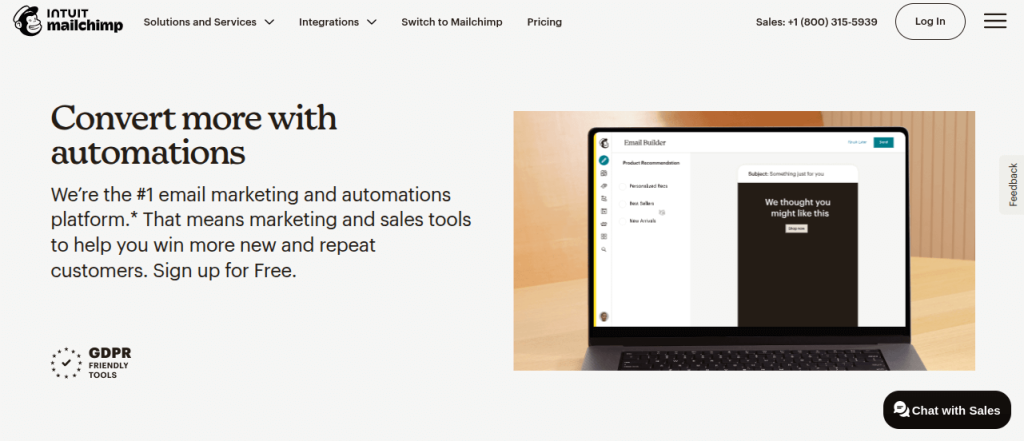
MailChimp makes targeted email marketing simple, even if you’re just getting started. You can segment your audience, personalize emails, and even include dynamic content in your automated targeted email marketing campaigns.
3. Brevo
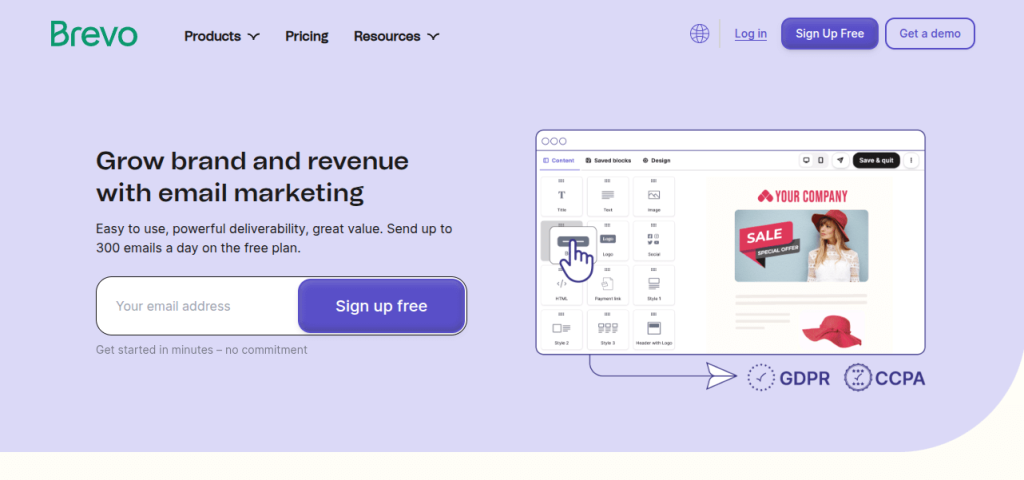
Brevo provides email and SMS campaigns, basic automation features, and unlimited contact storage, with up to 100,000 contacts on the free plan. If you have a huge contact list, Brevo is a cost-effective solution for your targeted email marketing campaigns.
4. Active Campaign
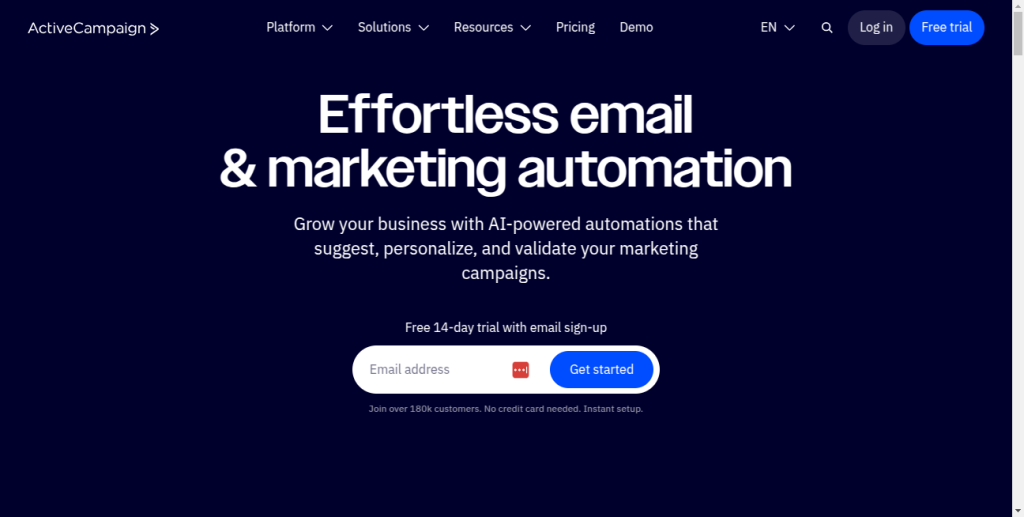
ActiveCampaign offers advanced automation workflows, seamless CRM integration, and detailed audience segmentation to enhance personalization in targeted email campaigns. It is best suited for targeted email marketing campaigns with complex automation requirements.
5. Klaviyo
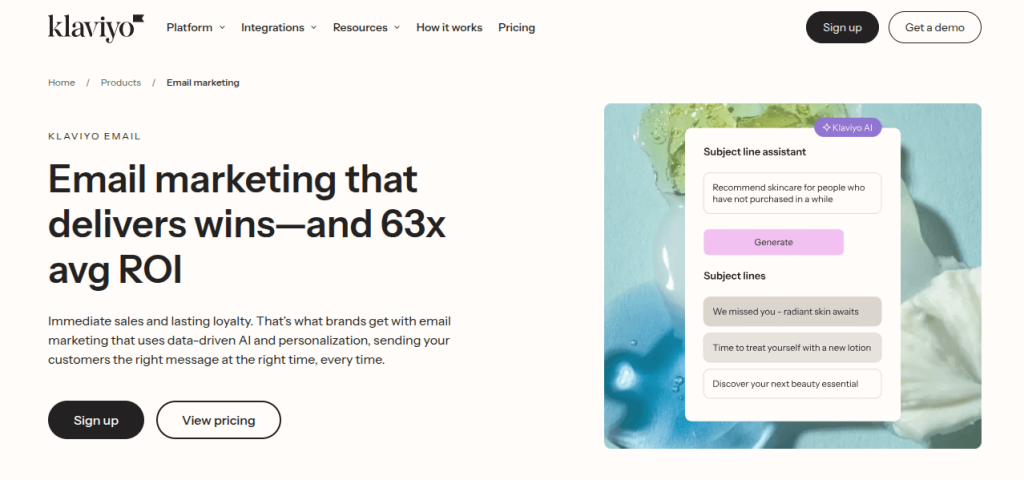
Klaviyo specializes in targeted e-commerce email marketing with advanced segmentation, personalized email automation, and built-in revenue tracking to measure campaign performance.
Create Targeted Email Marketing Campaigns that bring in long-term customers with Retainful’s easy-to-use email marketing tools.
Wrapping up
Targeted email marketing is about building real connections with your audience. Instead of flooding inboxes, send targeted emails that your customers want to read.
Use these tactics in your email marketing campaigns to send relevant content to your targeted audience.
- Email Segmentation
- Personalization strategies
- Targeted email marketing
You can even include the strategies used by the great targeted email marketing examples mentioned in the blog to create your targeted emails.
The best targeted email marketing campaign will help you to achieve the following:
- Provide personalized recommendations tailored to the targeted audience lists.
- Share your brand story
- Highlight your best products
- Offer exclusive deals
The key is delivering the right message to the right person at the right time.
Also read :
- Yotpo Migration Guide: Migrate From Yotpo to Retainful
- 100 Thanksgiving email subject lines for 2025 (Best practices)
- How to build an email marketing strategy like Netflix
Frequently asked questions
A targeted message is a personalized communication sent to a specific audience segment rather than a generic list. It uses data like purchase history or browsing behavior to ensure content is relevant to the recipient.
Email marketers can target different segments by leveraging three data layers: Behavioral (e.g., cart abandonment), Demographic (e.g., age), and Geographic (e.g.,time zone). Combining these allows for “hyper-personalization”.
Start with a “Value Exchange” strategy. Offer niche lead magnets, use segmented opt-in forms to tag a subscriber’s interests. This ensures your list is high-quality and pre-segmented.
During the consideration stage, use Case Studies, User-Generated Content (UGC), and Comparison Guides. These build the necessary trust and social proof to move a lead from “evaluating” to “purchasing.”
Direct Targeting: Focuses on immediate conversion (e.g., “Buy this now with 20% off”). It is high-intent and measurable. Indirect Targeting: Focuses on brand awareness and nurturing (e.g., “Here are 5 tips for better email ROI”). It builds long-term trust.
Integrate your email platform with a CRM to automate “Retention Loops.” Use purchase history and real-time user actions to trigger emails or loyalty rewards to increase the CLV.
The 80/20 rule suggests that 80% of your revenue typically comes from 20% of your subscribers. Identify this high-value segment to create “targeted VIP” workflows that maximize ROI.