Ecommerce advertising has become a survival skill for online brands.
Many businesses face the painful reality of “bleeding” budget on high CPCs and low-intent clicks that never actually convert.
This guide solves that frustration by providing a 2026 blueprint of the top 11 platforms, including the new frontiers of ChatGPT and WhatsApp
We’ve covered:
- Comparison chart for the best ecommerce advertising platforms
- Breakdown of each ecommerce advertising platform
- An ecommerce advertising example breakdown- Peak Performance’s case study
- Best channels to retain your acquired customers
Acquire once and retain forever with Retainful’s automation workflows
What is ecommerce advertising?
Ecommerce advertising is the process of placing paid content on digital platforms to drive traffic to an online store and convert browsers into buyers.
Unlike organic marketing, which relies on long-term SEO and social media growth, advertising allows brands to “pay for play”. It secures immediate visibility on search engines, social media feeds, and marketplaces.
The core objective is to move a customer through the marketing funnel.
Modern strategies now focus on “Full-Funnel Commerce,” where ads are not just seen on a screen but are integrated into the user’s lifestyle through:
- Search intent: Appearing when a user actively looks for a solution (e.g., Google or Amazon).
- Discovery & impulse: Sparking interest through visual storytelling (e.g., TikTok or Instagram).
- Conversational commerce: Solving problems through AI-driven dialogue (e.g., ChatGPT or WhatsApp marketing).
Related reading: 11 Best Ecommerce Email Templates + Examples
Ecommerce advertising channels comparison chart
| Channel | Avg. CPC | Intent level | Best for industry | Primary ad format |
| Google Search | $1.15 – $4.50 | Very high | Tech, Home Goods, B2B | Search Snippets |
| Google Shopping | $0.45 – $1.15 | High | Apparel, Food, Retail | Product Cards |
| Meta (FB/IG) | $0.60 – $1.15 | Medium | Beauty, Gifting, Jewellery | Reels & Carousels |
| TikTok Shop | $0.20 – $0.90 | High/Impulse | Fast Fashion, Wellness | Live Shopping/Spark |
| Amazon Ads | $0.80 – $2.50 | Extreme | CPG, Kitchen, Household | Sponsored Products |
| $0.15 – $1.40 | Low-Medium | Luxury, Interior, DIY | Collection Pins | |
| ChatGPT (Ads) | $2.00 – $5.00* | Consultative | SaaS, High-Ticket Ecom | Sponsored Responses |
| YouTube | $0.10 – $0.30* | Medium | Gadgets, Fitness | Shoppable In-Stream |
| LinkedIn Ads | $5.00 – $8.00 | High (B2B) | Corporate Gifts, SaaS | Sponsored Content |
| Reddit Ads | $0.30 – $2.00 | Consultative | Electronics, Gaming | Promoted Posts |
| Snapchat Ads | $0.30 – $1.00 | Medium | Makeup, Accessories | AR Lenses/Filters |
11 Best ecommerce advertising platforms in 2026
Here are the 11 best ecommerce advertising platforms:
3. Meta (Facebook & Instagram)
6. YouTube Video Action Campaigns
10. Reddit Ads
11. LinkedIn Ads
Retarget with the right message to the right people effortlessly using Retainful’s segmentation and lists
1. Google Ads (Search & PMax)
Google remains the foundation of high-intent traffic.
In 2026, Performance Max (PMax) became the primary vehicle for using AI to bid across Search, YouTube, Display, and Gmail simultaneously.
- Advantages:
- Unmatched intent: Targets users at the exact moment they are looking for your product.
- Automation: PMax handles the complex work of cross-channel bidding and placement.
- Unmatched intent: Targets users at the exact moment they are looking for your product.
- Disadvantages:
- High CPCs: Most competitive keywords can be prohibitively expensive for low-margin brands.
- “Black Box” reporting: PMax offers limited visibility into exactly which search terms or placements are driving the most value.
- High CPCs: Most competitive keywords can be prohibitively expensive for low-margin brands.
2. Google Shopping
Shopping Ads are the visual counterpart to search, showing your product image, price, and ratings directly on the results page.
- Advantages:
- High conversion: Users see the price and product before clicking, leading to better-qualified traffic.
- Visual trust: Star ratings and shipping labels provide instant social proof.
- High conversion: Users see the price and product before clicking, leading to better-qualified traffic.
- Disadvantages:
- Feed management: Requires constant technical maintenance of the Google Merchant Centre.
- Price sensitive: If your price is significantly higher than competitors’ shown on the same page, your CTR will plummet.
- Feed management: Requires constant technical maintenance of the Google Merchant Centre.
3. Meta (Facebook & Instagram)
Meta continues to lead in “Discovery Commerce.”
The Advantage+ Shopping Campaigns are now the gold standard, using AI to automate audience targeting.
- Advantages:
- Visual storytelling: Excellent for lifestyle products that need high-quality video or carousel images.
- Deep data: Leverages years of consumer behaviour data to find “lookalike” buyers.
- Visual storytelling: Excellent for lifestyle products that need high-quality video or carousel images.
- Disadvantages:
- Ad fatigue: Creative assets burn out quickly; you need 3–5 new variations every week to maintain ROAS.
- Privacy shifts: Apple’s privacy changes and new 2026 regulations continue to make tracking “off-platform” conversions difficult.
- Ad fatigue: Creative assets burn out quickly; you need 3–5 new variations every week to maintain ROAS.
4. TikTok Shop Ads
TikTok has evolved from a social app to a complete commerce engine. It is the fastest-growing channel for Gen Z and Millennials.
- Advantages:
- Frictionless checkout: Users can buy directly in the app without visiting your website.
- Viral potential: Creative that “doesn’t look like an ad” can achieve massive organic reach alongside paid spend.
- Frictionless checkout: Users can buy directly in the app without visiting your website.
- Disadvantages:
- Production demand: Requires a constant stream of authentic, UGC-style video content.
- Short attention span: You have less than 2 seconds to hook a viewer before they scroll.
- Production demand: Requires a constant stream of authentic, UGC-style video content.
5. Amazon Sponsored Products
If you sell on Amazon, this is non-negotiable. It places your items in the first few rows of the search results.
- Advantages:
- Point of sale: You are reaching the customer on the literal “shelf” where they buy.
- Easy setup: No creative needed; Amazon uses your existing listing photos and data.
- Point of sale: You are reaching the customer on the literal “shelf” where they buy.
- Disadvantages:
- Internal competition: You are bidding against other sellers on your own brand terms.
- Platform fees: Between ad costs and Amazon’s referral fees, profit margins can be very thin.
- Internal competition: You are bidding against other sellers on your own brand terms.
6. YouTube video action campaigns
YouTube has shifted toward “Shoppable Video,” allowing viewers to browse a product feed while the video plays.
- Advantages:
- Engagement: Ideal for products that require a demonstration (e.g., kitchen gadgets, tech).
- Massive reach: Access to over 2 billion monthly users with TV-like impact.
- Engagement: Ideal for products that require a demonstration (e.g., kitchen gadgets, tech).
- Disadvantages:
- Creative barrier: High-quality video production is expensive and time-consuming.
- Interruptive: Non-skippable ads can sometimes cause negative brand sentiment if overused.
- Creative barrier: High-quality video production is expensive and time-consuming.
7. Pinterest Ads
Pinterest is a “Visual Discovery” engine where users go to plan future purchases (weddings, home renovations, fashion).
- Advantages:
- Early influence: You reach customers weeks before they even search on Google or Amazon.
- Long shelf life: A “Pin” can continue to drive traffic months after the ad spend has ended.
- Early influence: You reach customers weeks before they even search on Google or Amazon.
- Disadvantages:
- Niche specific: Works exceptionally well for Home, Beauty, and Fashion, but struggles with tech or B2B.
- Slower conversion: The “planning” mindset means the sales cycle is often longer than on TikTok or Facebook.
- Niche specific: Works exceptionally well for Home, Beauty, and Fashion, but struggles with tech or B2B.
8. Microsoft (Bing) Ads
Bing now powers the AI search features across the Windows ecosystem, capturing an older, higher-income audience.
- Advantages:
- Lower CPCs: Typically 30–70% cheaper than Google for the same keywords.
- Integration: Your ads automatically appear across Yahoo, AOL, and Windows AI search.
- Lower CPCs: Typically 30–70% cheaper than Google for the same keywords.
- Disadvantages:
- Lower Volume: Much smaller search share than Google.
- Demographic Bias: Skews significantly toward desktop users over mobile.
- Lower Volume: Much smaller search share than Google.
9. Snapchat AR Ads
Leading the way in Augmented Reality, Snapchat lets users “try on” products through their camera lens.
- Advantages:
- Immersive experience: Virtual try-ons for makeup and accessories lead to much lower return rates.
- Gen Z reach: Captures the 13–24 demographic better than almost any other platform.
- Immersive experience: Virtual try-ons for makeup and accessories lead to much lower return rates.
- Disadvantages:
- Technical complexity: Building high-quality AR lenses requires specialized developers.
- Younger audience: Lower purchasing power compared to Facebook or LinkedIn users.
- Technical complexity: Building high-quality AR lenses requires specialized developers.
10. Reddit Ads
Reddit is the “Trust” platform, where users go for honest reviews and community advice.
- Advantages:
- Community trust: If your product solves a specific problem for a subreddit, the community becomes your sales force.
- High engagement: Users read long-form comments and value detailed information.
- Community trust: If your product solves a specific problem for a subreddit, the community becomes your sales force.
- Disadvantages:
- Anti-Ad Sentiment: Redditors are notoriously hostile toward “fake” or overly corporate advertising.
- Moderation Risk: Ads can be downvoted and commented on, which can be risky if your product has known flaws.
- Anti-Ad Sentiment: Redditors are notoriously hostile toward “fake” or overly corporate advertising.
11. LinkedIn Ads
The rising star for B2B E-commerce, specialised gifting, and high-end professional equipment.
- Advantages:
- Job-Title targeting: Reach decision-makers at specific companies with professional purchasing power.
- High AOV: Leads to much higher Average Order Values than social platforms.
- Job-Title targeting: Reach decision-makers at specific companies with professional purchasing power.
- Disadvantages:
- Most expensive: CPCs can often exceed $10, making it too pricey for small consumer items.
- Limited scale: Not suitable for mass-market consumer goods like snacks or fast fashion.
- Most expensive: CPCs can often exceed $10, making it too pricey for small consumer items.
Ecommerce advertising example
The brand:Peak Performance (Premium Outdoor Apparel)
The challenge: Despite having a high-quality product, Peak Performance struggled to advertise profitably on Meta (Facebook/Instagram). It was stagnant, and the brand was nearly ready to write it off as an ineffective platform for their niche.
The advertising strategy:
The turnaround was built on three specific pillars of ecommerce advertising that any brand can replicate in 2026:
- Creative innovation: They moved away from generic “catalogue” ads. Instead, they developed a structured system to test different ad angles, copy, and visual formats. By treating “Creative” as their primary targeting tool, they were able to identify exactly what resonated with outdoor enthusiasts.
- Full-funnel alignment: The team didn’t just fix the ads; they redesigned the Landing Pages. They conducted deep research into customer behaviour and Amazon feedback to ensure the messaging on the website perfectly matched the “hook” used in the advertisements.
- Data-driven scaling: Instead of guessing, they used a systematic approach to aggregate data. Once a specific ad angle was proven to work, they shifted budget aggressively into those “winners” while cutting spend on low-performing assets.
The 100% Verifiable Results:
- 95% New customer growth: Over 95% of the sales generated from the new ad strategy came from first-time buyers, effectively building a massive new customer base for the brand.
- Reduced CPA: Even as they scaled their ad spend “explosively,” they were able to significantly reduce their new customer acquisition costs (CPA).
- Channel transformation: What was once a “struggling” channel became a high-ROI growth engine that consistently drove sustainable, long-term profitability.
Key takeaway: Success in 2026 isn’t just about the “platform.” It’s about the synergy between your ad creative and your landing page. Peak Performance proved that even a “saturated” market can be dominated if you optimise the entire customer journey from click to checkout.
Secondary channels to retain your customers
Don’t pay to “buy” the same customer twice. Once you’ve acquired customers, move them into owned channels to retain them effectively.
Email & SMS
Instead of complex, enterprise-priced tools, 2026’s top-performing brands are switching to Retainful. It is an all-in-one retention platform specifically built to turn one-time shoppers into repeat buyers.
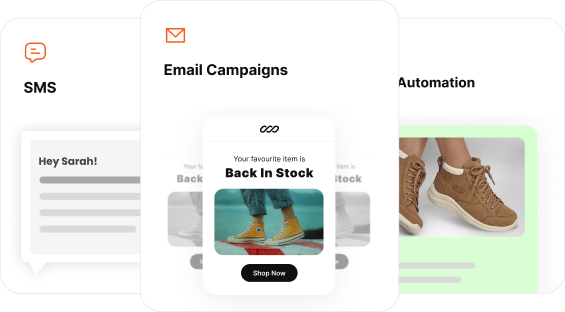
You can send email and SMS for all stages of the customer journey, from Welcome sequence, cart abandonment recovery, to Thankyou emails.
- Next-order coupons: Retainful’s standout feature automatically generates unique discount codes for a customer’s next purchase immediately after they finish their first, driving the second sale instantly.
- Automated win-backs: Set it and forget it. Retainful identifies customers who haven’t shopped in 60+ days and sends a perfectly timed “We Miss You” win-back email sequence.
- Unified SMS: Use SMS for high-urgency triggers. When an email goes unread, Retainful can automatically follow up with a text for “Flash Sales” or “Cart Reminders,” boasting a 98% open rate.
WhatsApp Business
The 2026 leader in conversational commerce. WhatsApp has moved beyond support to become a full-fledged sales channel.
- Instant support: Users can ask questions about their order and receive instant, AI-powered answers.
- High engagement: Because it lives in a personal messaging app, WhatsApp messages have significantly higher click-through rates than traditional marketing.
- Direct checkout: In many regions, customers can now browse a catalogue and pay directly within the WhatsApp chat, removing every ounce of friction from the repeat purchase.
Turn first-time buyers into regulars automatically using Retainful’s omnichannel automation.
Wrap up!
The “set it and forget it” era of ads is over.
Success in 2026 belongs to the brands that treat ecommerce advertising as a full-funnel ecosystem. It blends high-intent search with conversational AI and automated retention via tools like Retainful.
Don’t wait for your competitors to move first. Pick two new channels from our list, feed them your first-party data, and start testing. Your next scale-up phase begins with the first click.
Also read:
10 Best Discount Email Templates + Examples
WhatsApp lead generation to 5x your leads in 2026.
How to get SMS leads in 2025 ( 5 SMS apps + templates)
Ecommerce advertising FAQ
Google Shopping and Amazon Ads lead for immediate sales due to high buyer intent.
They serve different goals. Google is best for quick, direct buys. ChatGPT is superior for “consultative” sales products that require advice, research, or complex comparisons.
Aim for 12–20% of your gross revenue. Start by putting 70% of that into one “discovery” channel (like TikTok) to build a customer base before spreading your budget too thin.
With third-party cookies gone, your own data is your targeting engine. Uploading customer lists allows AI to find “Lookalike” audiences that match your actual buyers’ behaviour.
It’s now a full sales funnel. In 2026, you can use WhatsApp to send abandoned cart alerts, offer personalised product picks, and let customers pay directly in the chat.
Ignoring retention. Many brands overspend to “re-buy” the same customers. Use a tool like Retainful to automate repeat purchases via email and SMS instead of relying solely on paid ads.